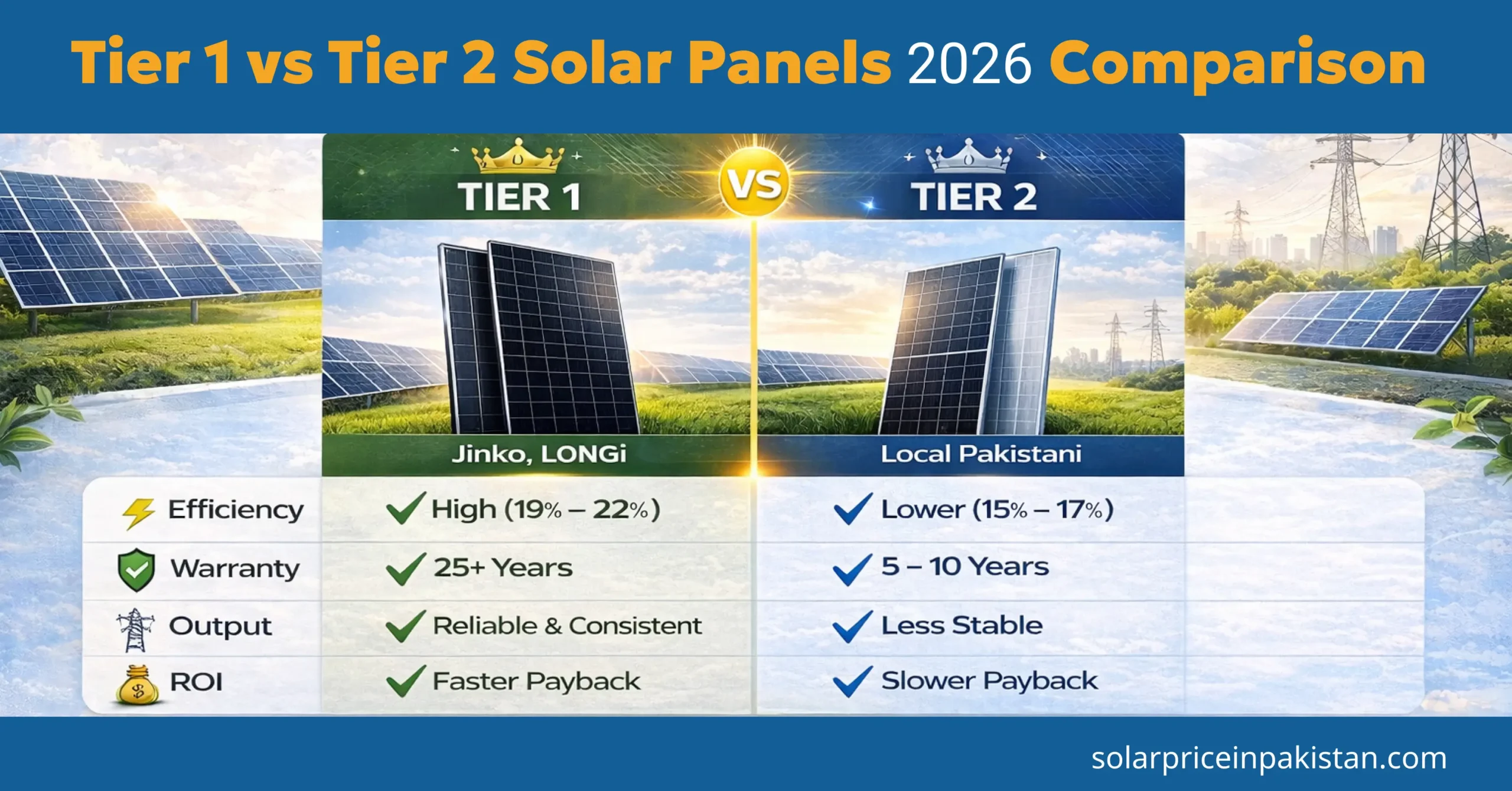
Ultimate Comparison: Tier 1 vs Tier 2 Solar Panels—Choose the Best Option
How to choose the best Tier 1 vs. Tier 2 solar panels? The use of solar energy has increased dramatically in Pakistan in recent years as a result of favorable government policies, frequent power disruptions, and growing electricity bills. Selecting the appropriate solar panels is one of the most crucial choices for solar purchasers. Given the variety of brands and classifications, it’s imperative to comprehend the comparison between Tier 1 and Tier 2 solar panels, particularly when making long-term investment plans.
This post will explain the differences between Tier 1 and Tier 2 solar panels, compare the costs of Tier 1 and Tier 2 solar panels in Pakistan, and offer advice on how to choose the best solar module for your residence or place of business.
What Are Tier 1 and Tier 2 Solar Panels?
Bloomberg New Energy Finance’s “Tier” classification is frequently used to group solar panels. It is not always based on technical specifications but rather on a manufacturer’s bankability, quality record, and financial stability.
Tier 1 vs Tier 2 Solar Panels:
Tier 1 Solar Panels
Globally renowned manufacturers with a solid performance history, sound financial standing, and bankability create Tier 1 panels. These brands are frequently utilized in large-scale and multinational utility projects.
Examples include:
- Jinko Solar
- Longi Solar
- Canadian Solar
- Trina Solar
Tier 2 Solar Panels
Usually, Tier 2 panels come from smaller or less well-known producers. Even though they might still function properly, they often have a smaller global market share, shorter warranties, and less financial support.
Tier 1 vs Tier 2 Solar Panels Comparison
You can better grasp the essential distinctions by making a direct comparison:
| Feature | Tier 1 Solar Panels | Tier 2 Solar Panels |
|---|---|---|
| Manufacturer Reputation | Global, well-established | Regional or smaller brands |
| Bankability | High | Moderate |
| Warranty | 12–25 years | 10–20 years |
| Efficiency | Higher (20–22%+) | Moderate (17–20%) |
| Degradation Rate | Lower | Higher |
| Quality Consistency | High | Variable |
| Price in Pakistan | Higher | Lower |
Tier 1 vs Tier 2 Solar Panels Price in Pakistan
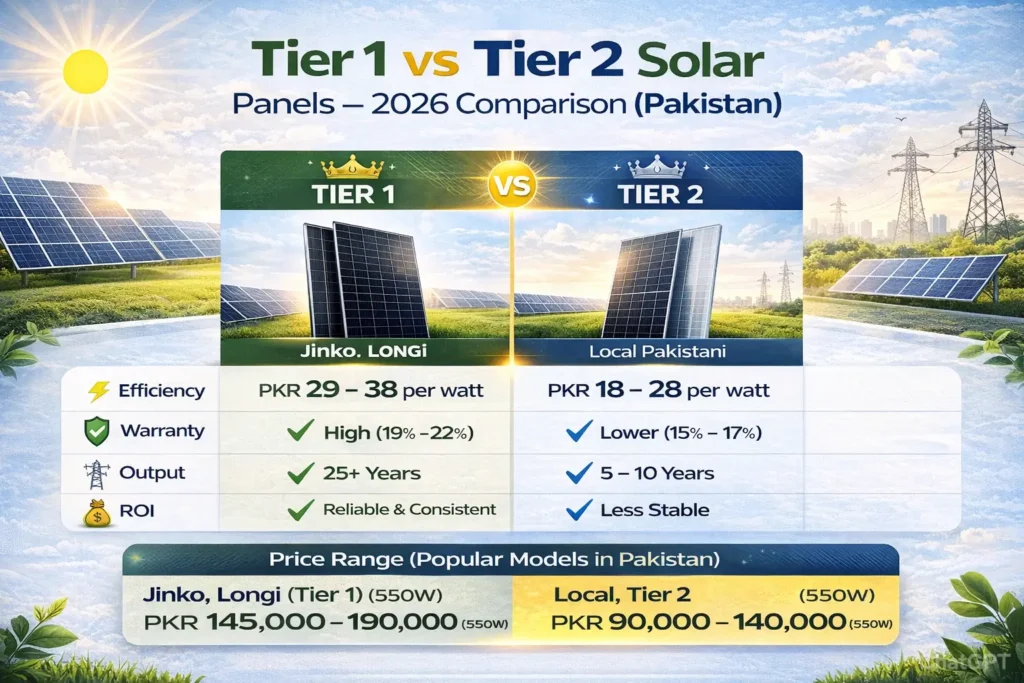
This is a rough pricing range for the Pakistani market in 2026:
Solar Panel Price Table (PKR)
| Panel Type | Wattage | Tier | Price (PKR) |
|---|---|---|---|
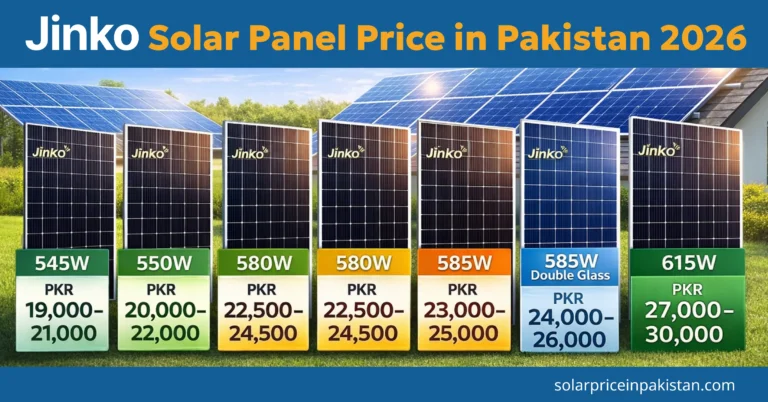
| Jinko (Tier 1) | 545W | Tier 1 Solar Panels | 19,000–21,000 |
| Longi (Tier 1) | 580W | Tier 1 Solar Panels | 22,000–24,000 |
| Canadian Solar (Tier 1) | 550W | Tier 1 Solar Panels | 20,000–23,000 |
| Local Brand X | 540W | Tier 2 Solar Panels | 15,000–17,000 |
| Local Brand Y | 500W | Tier 2 Solar Panels | 13,000–16,000 |
| Tier 2 Import Z | 580W | Tier 2 Solar Panels | 18,500–20,000 |
Exchange rates, dealer margins, and import taxes all affect actual prices.
Key Features: Tier 1 vs Tier 2 Panels
Tier 1 Solar Panels Key Features
- Proven Reliability—Used in large utility projects worldwide
- Higher Efficiency—Better power output per panel
- Lower Degradation Rate—More stable long-term energy yield
- Extended Warranties—Longer performance and product warranties
- Global Service Networks—Easier warranty claims and support
Tier 2 Solar Panels Key Features
- Affordable Price Point—Lower upfront cost
- Good Performance—Meets basic project needs
- Local Brand Support—Easier availability in local markets
- Shorter Warranty Periods—Slightly limited compared to Tier 1
Specifications—Typical Solar Panels
A comprehensive specification comparison of Tier 1 and Tier 2 modules may be found here:
| Specification | Tier 1 Panels | Tier 2 Panels |
|---|---|---|
| Cell Type | Monocrystalline PERC/TOPCon | Monocrystalline / Polycrystalline |
| Power Output | 540–660 W | 450–600 W |
| Efficiency | 20.8%–22.6% | 17.8%–20.2% |
| Operating Temperature | –40°C to +85°C | –35°C to +80°C |
| Warranty | 12-year product / 25-year performance | 10-year product / 20-year performance |
| Degradation | ~0.3–0.5% per year | ~0.5–0.7% per year |
Performance and Long-Term Savings
The performance of Tier 1 and Tier 2 panels over time is one of their main distinctions. Over time, Tier 1 panels often maintain a higher percentage of their rated capacity. For instance:
- A Tier 1 panel may degrade only ~0.3% per year
- A Tier 2 panel might degrade ~0.6% per year
Over the course of your solar setup, this leads to a higher energy yield and a better return on investment for Tier 1 systems.
Tier 1 vs Tier 2 Solar Panels Price in Pakistan—Value Assessment
Even though Tier 1 panels are frequently more expensive up front, their longer warranties and increased efficiency sometimes result in superior long-term value, particularly when combined with hybrid or net metering systems.
However, Tier 2 panels may be suitable for:
- Budget-conscious buyers
- Temporary or short-term installations
- Projects where long ROI is not the priority
Are Tier 1 solar panels worth the extra price?
Yes, Tier 1 panels offer superior long-term performance, more robust warranties, and higher resale value if you want to retain your solar system for more than 20 years.
Can Tier 2 panels perform well in Pakistan’s climate?
Yes, many Tier 2 panels can operate properly, but they may degrade faster and last less time than Tier 1 versions.
What is the ideal choice for home solar systems?
Tier 1 solar panels are advised for the majority of homeowners looking for dependability and durability.
Benefits of Tier 1 Solar Panels
- Higher Efficiency—Better sunlight capture and power output
- Bankability—proven track records globally
- Long Warranty—Greater peace of mind
- Lower Degradation—More energy over time
- Better Resale Value—Higher demand in used market
Benefits of Tier 2 Solar Panels
- Lower Initial Cost
- Good for Mid-Budget Projects
- Local Brand Availability
How to Choose Based on Your Needs
If You Want Maximum Efficiency
Use Tier 1 panels.
If You Want Lower Upfront Cost
Studio or small home: Tier 2 may be feasible
If You Have Are Installing Solar For 10+ Years
Tier 1 provides a higher return on investment.
Cost Comparison – Long-Term ROI Example
| Item | Tier 1 Panel | Tier 2 Panel |
|---|---|---|
| Initial Cost (8 kW system) | 1,600,000 PKR | 1,350,000 PKR |
| 25-Year Lifetime Output | ~7,200 kWh | ~6,300 kWh |
| Approximate ROI | 3.5–4.0 years | 4.5–5.0 years |
Note: Assumes similar inverter and installation quality.
FAQs
What does “Tier 1” mean in solar panels?
Not always technical superiority, Tier 1 relates to the manufacturer’s bankability, financial stability, and track record of completed projects.
Are Tier 2 solar panels unreliable?
Not inherently—many Tier 2 panels perform well—but they may come with shorter warranties and higher degradation.
Which panels are better for net metering?
Because of their long-term performance, Tier 1 panels are a better option for net metering systems.
Is the price difference justified between Tier 1 and Tier 2?
Yes, Tier 1’s durability and guarantees provide superior value if you intend to retain the system for more than 20 years.
Conclusion
The decision between Tier 1 and Tier 2 solar panels ultimately comes down to your spending limit, long-term objectives, and anticipated system longevity.
- Tier 1 solar panels are perfect for homes and companies wanting to utilize renewable energy for decades because they are more efficient, come with longer warranties, and are more affordable over the long run.
- Tier 2 solar panels may be a more cost-effective option for limited budgets or short-term installations, but they frequently come with lower warranties and shorter lifespans.
You can make a better investment and optimize your solar return on investment by being aware of the price and performance differences between tier 1 and tier 2 solar panels in Pakistan.