Best Double Glass vs Single Glass Solar Panels: Which One Should You Choose in 2026?
As Pakistan’s solar market matures, homeowners and businesses are faced with an increasingly important decision: double glass vs single glass solar panels. This choice can significantly impact your system’s longevity, performance, and return on investment. With solar panel prices fluctuating and technology evolving rapidly, understanding the differences between these two types is crucial for making an informed decision.
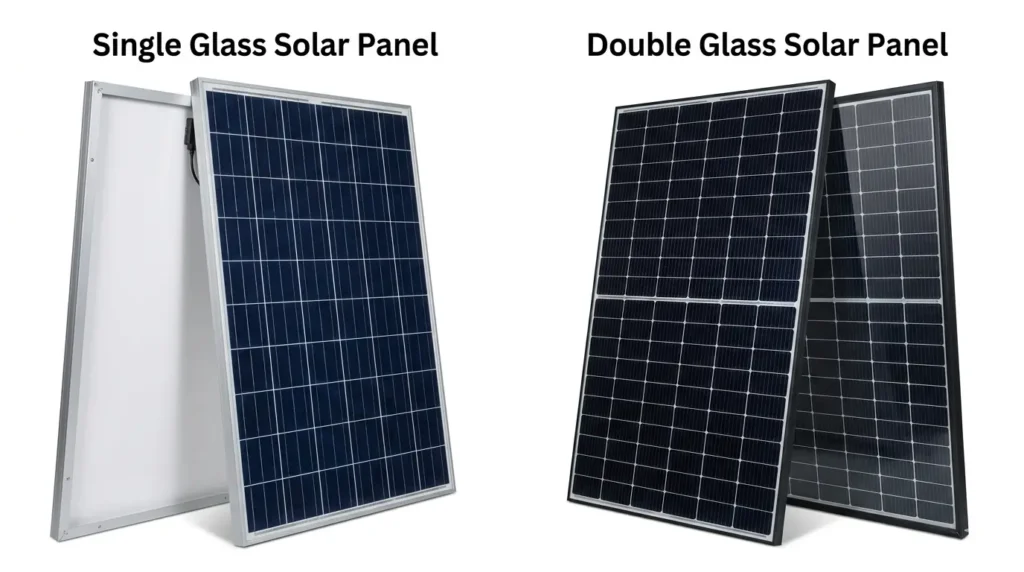
Single glass panels (also called monofacial or single-glass modules) have been the industry standard for decades. However, double glass panels (bifacial or dual-glass modules) have gained significant traction in recent years, offering enhanced durability and potential for higher energy yield. In this comprehensive guide, we’ll explore the double glass vs single glass solar panel debate, comparing prices, durability, efficiency, and long-term value to help you choose the right option for your Pakistani home or business.
What Are Single Glass Solar Panels?
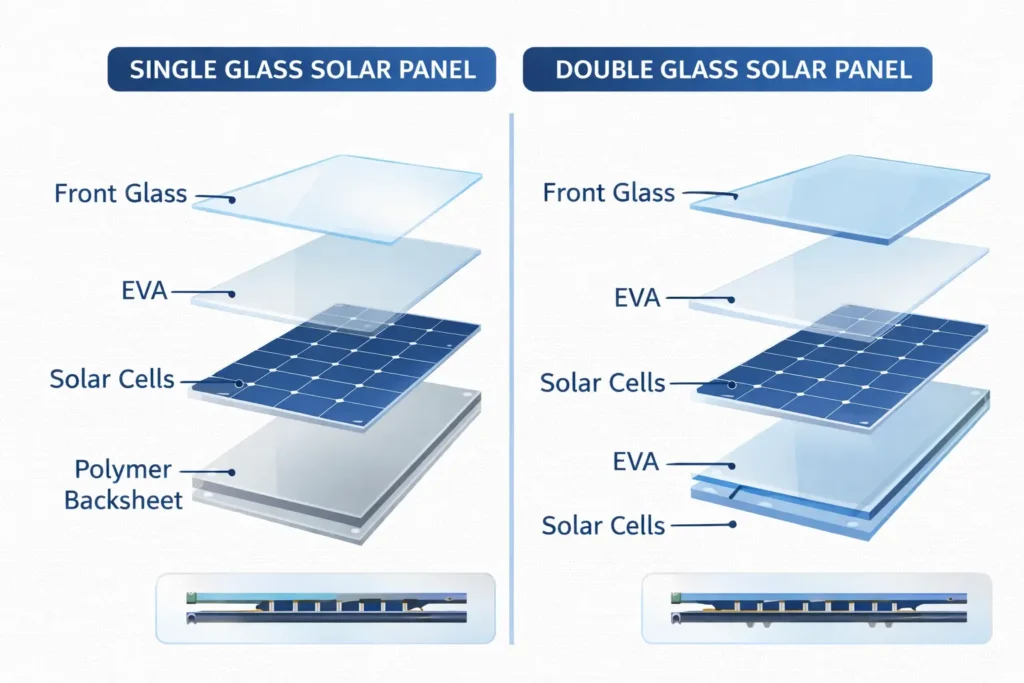
Single glass solar panels are the traditional photovoltaic modules that have dominated the market for years. As the name suggests, they feature a single layer of tempered glass on the front side, with a polymer-based backsheet protecting the rear of the panel.
Construction
- Front: Tempered glass (typically 3.2mm thick)
- Encapsulation: EVA (ethylene-vinyl acetate) or POE (polyolefin) layers
- Back: Polymer backsheet (typically white, black, or transparent)
Common Applications
Single glass panels are widely used in residential rooftop installations, commercial buildings, and ground-mounted systems where budget is a primary consideration and maximum durability isn’t critical.
What Are Double-Glass Solar Panels?
Double glass solar panels, also known as bifacial or dual-glass modules, feature tempered glass on both the front and rear sides. This construction replaces the traditional polymer backsheet with a second layer of glass, creating a more robust and durable panel.
Construction
- Front: Tempered glass (2.0-2.5mm)
- Encapsulation: EVA or POE layers
- Back: Tempered glass (2.0-2.5mm)
Common Applications
Double glass panels are ideal for ground-mounted systems, commercial rooftops, carports, and installations in harsh environments where durability and longevity are priorities.
Double Glass vs Single Glass Solar Panel: Key Differences
| Feature | Single Glass Panel | Double Glass Panel |
|---|---|---|
| Front Glass Thickness | 3.2mm | 2.0-2.5mm |
| Back Material | Polymer backsheet | Tempered glass |
| Total Thickness | 30-35mm | 28-32mm |
| Weight | 21-23 kg (for 550W) | 27-32 kg (for 550W) |
| Bifacial Capability | No (0% rear gain) | Yes (10-25% rear gain) |
| Durability | Good | Excellent |
| Micro-crack Resistance | Moderate | Superior |
| PID Resistance | Moderate | Superior |
| Fire Rating | Class C | Class A |
| Lifespan | 20-25 years | 25-30+ years |
| Price per Watt | Lower (baseline) | 15-30% higher |
Double Glass vs Single Glass Solar Panel Price in Pakistan
The double glass vs single glass solar panel price in Pakistan varies based on brand, technology, and quality. Here are the latest price ranges for 2026:
| Panel Type | Technology | Wattage | Price Range (PKR per Panel) |
|---|---|---|---|
| Single Glass | Mono PERC | 550W | 16,300 – 18,700 |
| Single Glass | N-type TOPCon | 580W | 17,600 – 20,700 |
| Double Glass | Bifacial Mono | 550W | 18,500 – 22,000 |
| Double Glass | Bifacial N-type | 580-600W | 20,500 – 25,000 |
Price Per Watt Comparison
| Panel Type | Price per Watt (PKR) |
|---|---|
| Single Glass (Standard) | 30 – 34 |
| Single Glass (Premium) | 34 – 38 |
| Double Glass (Standard) | 35 – 40 |
| Double Glass (Premium) | 38 – 45 |
Double glass panels typically cost 15-30% more than their single glass counterparts, but this premium can be justified by longer lifespan, better durability, and potential bifacial energy gains.
Advantages of Double-Glass Solar Panels
1. Superior Durability
The dual-glass construction provides exceptional mechanical strength, making double-glass panels highly resistant to environmental stress, hail, snow loads, and extreme weather conditions.
2. Enhanced Longevity
Double glass panels typically last 5-10 years longer than single glass panels, with many manufacturers offering 30-year warranties. The elimination of the polymer backsheet removes the risk of backsheet degradation—a common failure mode in single glass panels.
3. Bifacial Energy Gain
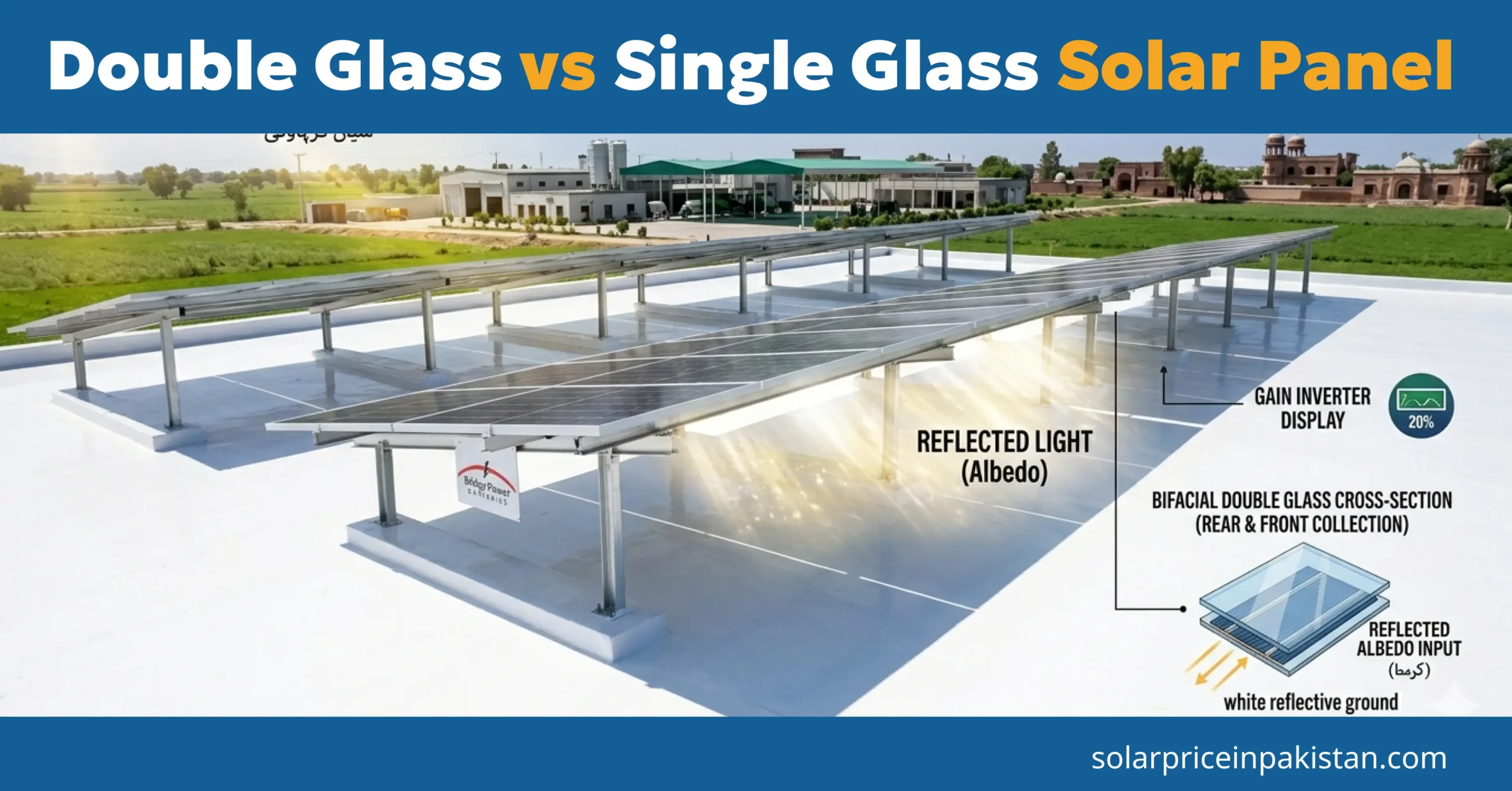
Double glass panels can capture reflected sunlight from the rear side, increasing total energy yield by 10-25% depending on installation conditions. This is particularly valuable in ground-mounted systems, carports, and installations with reflective surfaces like white roofs or light-colored ground cover.
4. Lower Degradation Rate
Double glass panels typically have lower annual degradation rates (0.35-0.45%) compared to single glass panels (0.5-0.6%), meaning they retain more power over their lifetime.
5. Better PID Resistance
Potential Induced Degradation (PID) is less common in double glass panels due to better insulation properties, ensuring consistent performance over time.
6. Superior Fire Safety
Double glass panels achieve higher fire safety ratings (Class A vs Class C for many single glass panels), making them preferable for commercial and industrial installations.
Advantages of Single Glass Solar Panels
1. Lower Upfront Cost
Single glass panels are significantly more affordable, with prices 15-30% lower than comparable double glass panels. This makes them attractive for budget-conscious consumers and projects with tight financial constraints.
2. Lighter Weight
Single glass panels weigh 15-25% less than double glass panels, reducing structural requirements and making installation easier, especially on residential roofs with weight limitations.
3. Proven Technology
With decades of field experience, single glass panels have a well-documented track record of reliability and performance.
4. Faster Payback Period
Due to lower initial investment, single glass systems often achieve payback periods 6-12 months shorter than double glass systems, despite lower total energy yield.
5. Wider Availability
Single glass panels are more widely available across Pakistan, with more distributors, dealers, and stock availability.
Bifacial Technology Explained
Bifacial technology is the key differentiator for double glass panels. Unlike traditional panels that only capture light from the front, bifacial panels generate electricity from both sides by capturing reflected sunlight (albedo) from the rear.
Bifacial Gain Factors
The rear-side gain depends on several factors:
- Ground Albedo: Reflective surfaces like white roofs, sand, or light-colored gravel can increase the amount of heat absorbed
- Installation Height: Panels mounted higher off the ground capture more reflected light
- Mounting Structure: Elevated mounting with minimal obstruction maximises rear exposure
- Row Spacing: Adequate spacing allows light to reach the rear surfaces
| Installation Type | Typical Bifacial Gain |
|---|---|
| Flat Roof (White Membrane) | 15-25% |
| Ground Mount (Light Ground) | 10-20% |
| Carport | 10-15% |
| Tilted Roof (Dark) | 5-10% |
| Residential Rooftop (Standard) | 5-12% |
Durability and Lifespan Comparison
| Factor | Single Glass | Double Glass |
|---|---|---|
| Hail Resistance | Good (25mm) | Excellent (35mm+) |
| Mechanical Load | 5400 Pa | 5400-7200 Pa |
| Micro-crack Risk | Moderate | Low |
| Backsheet Degradation | Risk after 15-20 years | No backsheet |
| Corrosion Resistance | Moderate | Excellent |
| Temperature Cycling | Good | Superior |
| Damp Heat Resistance | Good | Superior |
Environmental Performance
Temperature Coefficient
Both panel types have similar temperature coefficients, but double glass panels often have slightly better heat dissipation due to thinner glass and rear exposure.
| Parameter | Single Glass | Double Glass |
|---|---|---|
| Temperature Coefficient (Pmax) | -0.35% to -0.38%/°C | -0.34% to -0.36%/°C |
Performance in High Heat
In Pakistan’s extreme summer temperatures, both panel types experience reduced output. However, double glass panels’ better heat dissipation can provide a slight performance advantage.
Low-Light Performance
Both panel types perform well in low-light conditions, though bifacial double glass panels can capture diffuse light from both sides, potentially offering a small advantage.
When to Choose Double Glass Panels
Consider double glass panels if:
- You are installing a ground-mounted system with a reflective ground surface
- You have a flat roof with a white membrane that can reflect light
- You are building a carport or pergola where both sides are exposed
- You require maximum durability in harsh environments
- You plan to keep the system for 25+ years and want the longest possible lifespan
- You are willing to pay a 15-30% premium for enhanced performance and longevity
- Your installation site has high wind, hail, or snow exposure
When to Choose Single Glass Panels
Consider single glass panels if:
- You are on a tight budget and prioritising the lowest upfront cost
- Your roof has weight limitations that cannot accommodate heavier panels
- You are installing a standard residential rooftop with minimal rear exposure
- Your installation site has limited reflective surfaces for bifacial gain
- You prefer proven technology with decades of field data
- You expect to keep the system for 15-20 years rather than 25+
- You want the fastest payback period
Key Specifications Comparison
| Specification | Single Glass (Mono PERC) | Double Glass (Bifacial) |
|---|---|---|
| Cell Type | Monocrystalline | Monocrystalline |
| Front Glass | 3.2mm tempered | 2.0mm tempered |
| Rear Material | Polymer backsheet | 2.0mm tempered glass |
| Frame | Anodized aluminum | Anodized aluminum |
| Efficiency | 20.5-21.5% | 21-22.5% |
| Bifaciality Factor | 0% | 70-80% |
| First-Year Degradation | 2-3% | 1-2% |
| Annual Degradation | 0.5-0.6% | 0.35-0.45% |
| 25-Year Output | 80-85% | 87-90% |
| Product Warranty | 10-12 years | 12-15 years |
| Performance Warranty | 25 years | 25-30 years |
Installation Considerations
Structural Requirements
Double glass panels are heavier (27-32kg vs 21-23kg for single glass). Ensure your roof structure can support the additional weight before committing to double glass panels.
Mounting Systems
Double glass panels require specialised mounting hardware that allows light to reach the rear surface. Elevated mounting with minimal frame obstruction is recommended.
Ventilation
Proper ventilation behind panels is important for double glass systems to maximise bifacial gain and maintain optimal operating temperatures.
Conclusion
The double glass vs single glass solar panel decision ultimately depends on your specific installation conditions, budget, and long-term goals. For Pakistani consumers, both options offer compelling benefits.
Double glass panels excel in durability, longevity, and bifacial energy potential. They are the superior choice for ground-mounted systems, carports, commercial rooftops, and installations where maximum lifespan and performance are priorities. The 15-30% price premium is offset by 10-25% bifacial gains, longer warranties, and extended service life.
Single glass panels remain the practical choice for budget-conscious residential installations, particularly on standard rooftops where bifacial gain is limited. Their lower upfront cost, lighter weight, and proven reliability make them an excellent value proposition for homeowners seeking the fastest payback period.
For most Pakistani residential installations with standard tiled or shingled roofs, single glass panels from Tier-1 manufacturers offer an excellent balance of performance, durability, and value. For commercial installations, ground-mounted systems, and projects where maximum durability is essential, double glass panels represent a worthwhile investment that will pay dividends over decades of reliable service.
As solar technology continues to evolve, both panel types will improve in efficiency and affordability. However, understanding the fundamental differences in construction, performance, and long-term value will ensure you make the right choice for your specific needs.
Check the latest solar price in Pakistan. Click here
FAQs
Are double-glass solar panels worth the extra cost?
For ground-mounted systems, carports, and installations with reflective surfaces, yes—the 10-25% bifacial gain and extended lifespan can justify the 15-30% price premium. For standard residential rooftops with dark surfaces, single glass panels often provide better value.
How much more efficient are double glass panels?
Double glass panels have similar front-side efficiency (21-22.5%) to premium single glass panels, but can generate 10-25% additional energy from the rear side in optimal conditions.
Do double glass panels work in residential installations?
Yes, but the bifacial gain is typically lower (5-12%) on residential rooftops with dark shingles or tiles. The primary benefit for residential installations is enhanced durability and longer lifespan.
Which is better for Pakistan’s climate?
For Pakistan’s hot, dusty climate, double glass panels offer better resistance to environmental stress, micro-cracks, and PID. However, single glass panels have proven reliable for decades in similar conditions.
How long do double-glazed solar panels last?
Double glass panels typically last 25-30+ years, compared to 20-25 years for single glass panels. Many manufacturers offer 30-year warranties on double glass products.
Are double glass panels heavier?
Yes, double glass panels weigh approximately 27-32kg for a 550W panel, compared to 21-23kg for single glass panels of similar wattage.
What is bifacial gain?
Bifacial gain refers to the additional energy generated from the rear side of double glass panels when they capture reflected sunlight (albedo). This can increase total system output by 5-25%, depending on installation conditions.
Can I mix double glass and single glass panels in one system?
While technically possible, mixing panel types is not recommended as it can complicate system design, inverter matching, and warranty coverage.
Which type has a better warranty?
Double glass panels typically offer longer warranties—12-15 years product warranty and 25-30 years performance warranty, compared to 10-12 years and 25 years for single glass panels.
How does the price difference affect ROI?
Despite higher upfront costs, double glass panels can deliver comparable or better ROI over 25 years due to higher energy yield, lower degradation, and longer lifespan. However, payback periods are typically 6-12 months longer than single glass systems.