Best Solar Panel Price in Karachi 2026

Are You Being Overcharged? Solar Panel Price in Karachi – What’s the Real Cost After Import Duties? More homeowners are turning to solar energy as an affordable and dependable solution as electricity prices continue to rise and load-shedding continues to be a daily problem in Karachi. Karachi, Pakistan’s largest import hub, has the lowest solar panel prices in the country, providing residents with a major edge over other cities.
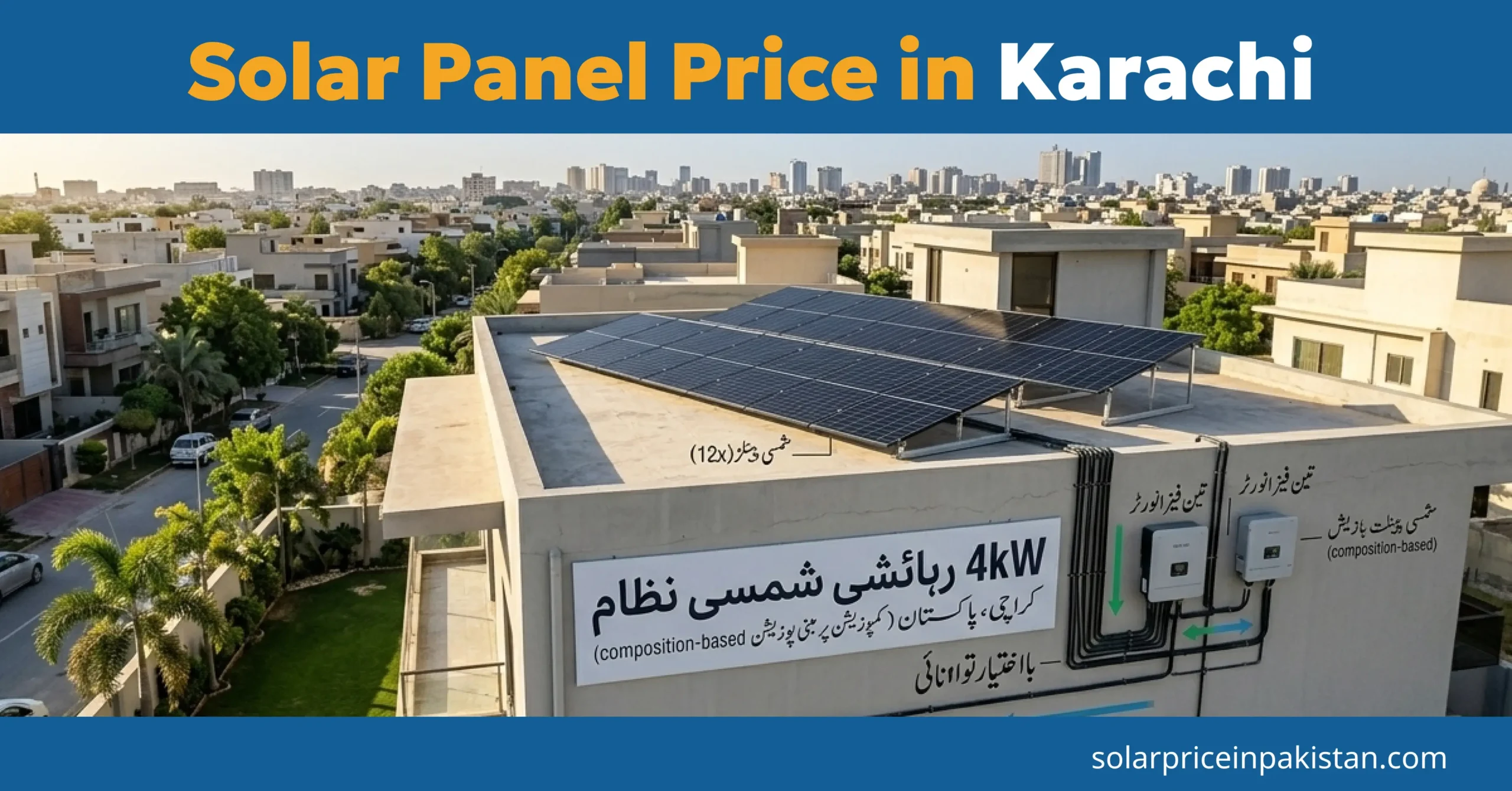
Residents of Karachi must contend with K-Electric’s escalating electricity bills, which are marked by frequent tariff increases and continuous load shedding. Because solar energy offers long-term savings, energy independence, and protection against growing energy expenses, many households have adopted it as a cost-effective choice. This comprehensive guide will walk you through everything you need to know about solar panel prices in Karachi, including brand-wise rates, system costs, installation factors, and expert tips for 2026.
Why Karachi Homeowners Are Switching to Solar
Several strong causes are driving Karachi’s transition to solar energy:
Rising Electricity Costs
With K-Electric tariffs crossing historic highs and frequent fuel price adjustments, a typical household consuming 500-700 units monthly faces substantial bills. Solar energy offers a way to slash these bills by 70-100%.
Load-Shedding Relief
In several Karachi neighborhoods, including Orangi Town, Korangi, and Naya Nazimabad, load-shedding still occurs despite advancements. When the grid fails, solar systems with battery backup continue to supply power.
Karachi’s Strategic Advantage
Pakistan’s biggest import hub is Karachi, where solar panels are often the cheapest in the nation. Due to its direct port connection, the city offers some of Pakistan’s most affordable panel rates.
Long-Term Savings
Solar panels typically have a lifespan of 25 to 30 years, offering 20+ years of nearly free electricity after the initial payback period of just 2-4 years.
Current Solar Panel Price in Karachi 2026 (Per Panel Rates)
The solar panel price in Karachi varies by wattage, brand, and technology. Below are the latest market rates updated for April 2026 based on data from verified sources.
Solar Panel Price in Karachi by Wattage
Note: These rates are for A-grade, Tier-1 panels. Prices may vary by dealer and location within Karachi.
Brand-Wise Solar Panel Price in Karachi
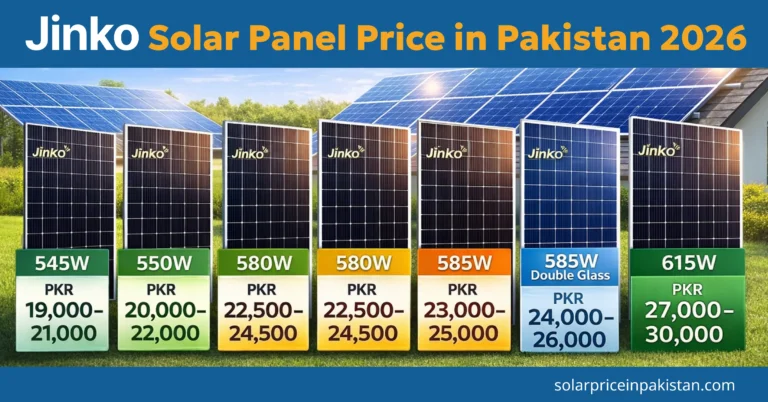
Different brands offer varying price points based on efficiency, warranty, and technology.
Price Alert: Recent Increases (2026)
Early in 2026, the cost of solar panels in Pakistan increased significantly. The cost of imported Chinese solar panels with capacities of 585W, 645W, and 720W increased by an average of Rs. 5,000 in local markets.
| Panel Wattage | Old Price | New Price |
|---|---|---|
| 585W | 16,000 – 17,000 | 20,000 – 21,000 |
| 645W | 20,000 | 24,000 – 25,000 |
| 720W | 22,000 – 25,000 | 30,000 – 35,000 |
Market estimates suggest imported panels are currently priced between Rs. 33 and Rs. 40 per watt, depending on brand and capacity, with increases attributed to regional tensions, rising global prices of silver and copper, and higher import-related expenses.
Complete Solar System Price in Karachi 2026
When evaluating the solar panel price in Karachi, it’s essential to consider the complete system cost, including panels, inverter, mounting structure, wiring, and installation.
System Price by Capacity and Type
System Price Comparison: On-Grid vs. Hybrid
Solar Panel Array Cost by System Size
Types of Solar Systems for Karachi Homes
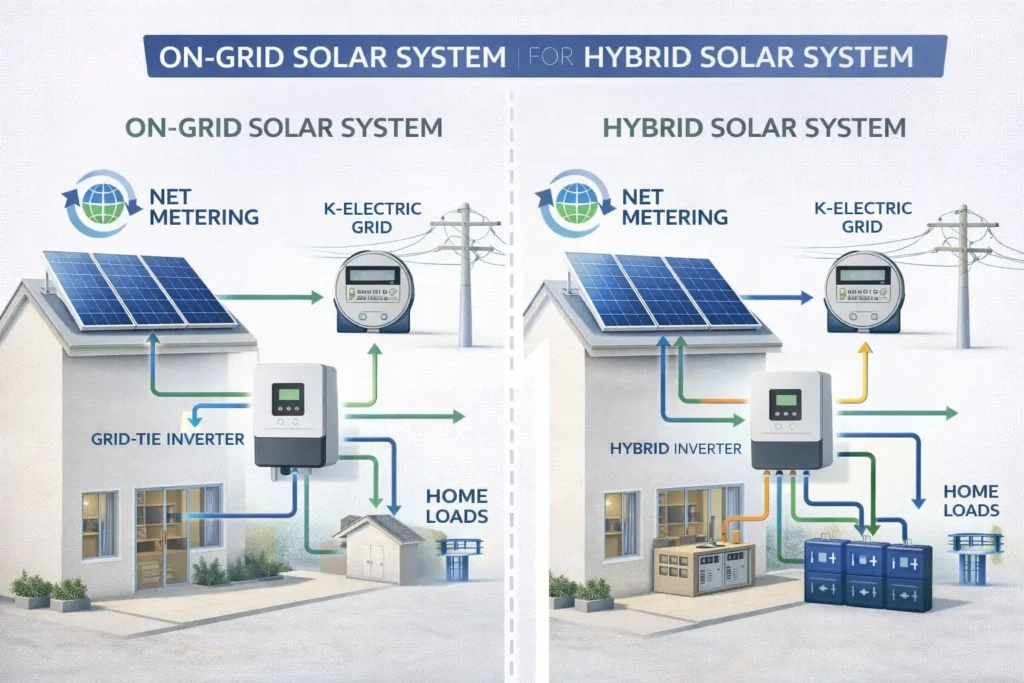
On-Grid Solar Systems
On-grid systems connect directly to the K-Electric grid and operate without batteries. They are the most affordable option and enable net metering, allowing you to sell excess electricity back to the grid.
Advantages:
- Lowest upfront cost (Rs. 450,000-550,000 for 3kW)
- Net metering reduces electricity bills by 80-100%
- Simple design with fewer components
- Fastest payback period (2.5-3.5 years)
Disadvantages:
- No power during grid outages
- Requires a stable grid connection
Hybrid Solar Systems
Hybrid systems combine solar panels with battery storage. During the day, panels charge batteries while powering your home. When the grid goes down or the sun sets, batteries take over.
Advantages:
- Complete protection from load-shedding
- Net metering compatible
- Battery storage optimizes self-consumption
- Most popular choice in Karachi
Disadvantages:
- Higher initial cost than on-grid (20-40% more)
- Battery replacement is needed every 5-8 years
Off-Grid Solar Systems
Fully independent from the grid, these systems are ideal for remote locations where grid access is unreliable. They require larger battery banks and higher upfront investment.
Advantages:
- Complete energy independence
- No reliance on grid stability
- Works in remote areas
Disadvantages:
- Highest initial investment
- Larger battery banks are required
- No net metering benefits
Key Features of Quality Solar Panels
1. High Efficiency
Higher efficiency panels generate more energy per square foot, requiring fewer panels for the same output. Look for panels with 21-24% efficiency ratings.
2. Strong Warranty
Tier-1 brands offer 25-30 year performance warranties and 12-15 year product warranties, ensuring long-term protection for your investment.
3. Temperature Coefficient
For Karachi’s hot and humid climate, choose panels with lower temperature coefficients (-0.35%/°C or better) to maintain output during summer months.
4. PID Resistance
Potential Induced Degradation (PID) resistance is crucial in Karachi’s humid conditions. Premium panels feature anti-PID protection.
5. Bifacial Capability (Optional)
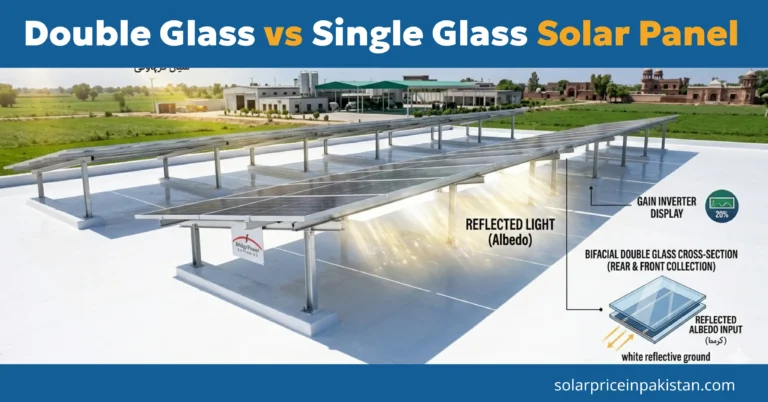
Double-glass bifacial panels can generate additional energy (10-25%) from reflected light, making them ideal for ground-mounted or carport installations.
Benefits of Installing Solar Panels in Karachi
1. Reduce Electricity Bills
One of the most significant benefits is saving money by reducing your electricity bills. By using solar energy, you can power your home or office while decreasing your reliance on K-Electric.
2. Reduce Grid Reliance
Using solar energy helps you lower your electricity use from the grid and use renewable energy instead. Solar energy gives you the freedom to produce your own power.
3. Long-Term Investment
Although the installation cost is high initially, solar panels typically last 25 to 30 years, saving you thousands of rupees in electricity costs over this period.
4. Environmental Benefits
Solar energy is a renewable resource that helps decrease the demand for fossil fuels like coal and natural gas, which are major contributors to air pollution and global warming.
5. Increased Property Value
Installing solar panels automatically increases the value of your home or business. Properties with solar installations are more attractive to potential buyers.
6. Karachi’s Strategic Advantage
Karachi benefits from direct port access, resulting in some of the lowest panel prices in Pakistan compared to other major cities.
Factors Affecting Solar Panel Price in Karachi
Several variables influence the solar panel price in Karachi and overall system costs:
1. Brand and Panel Technology
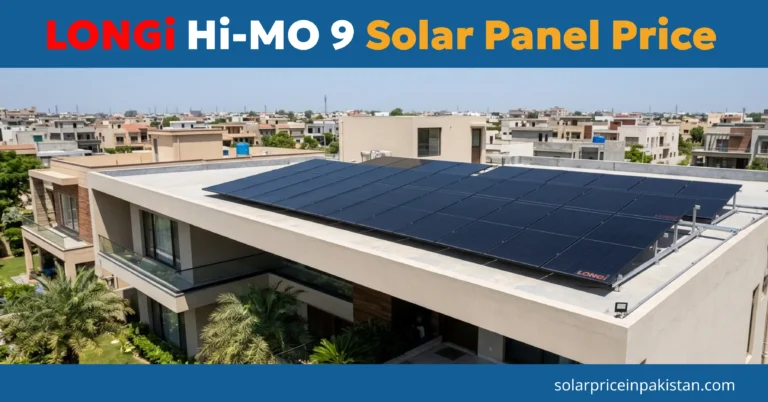
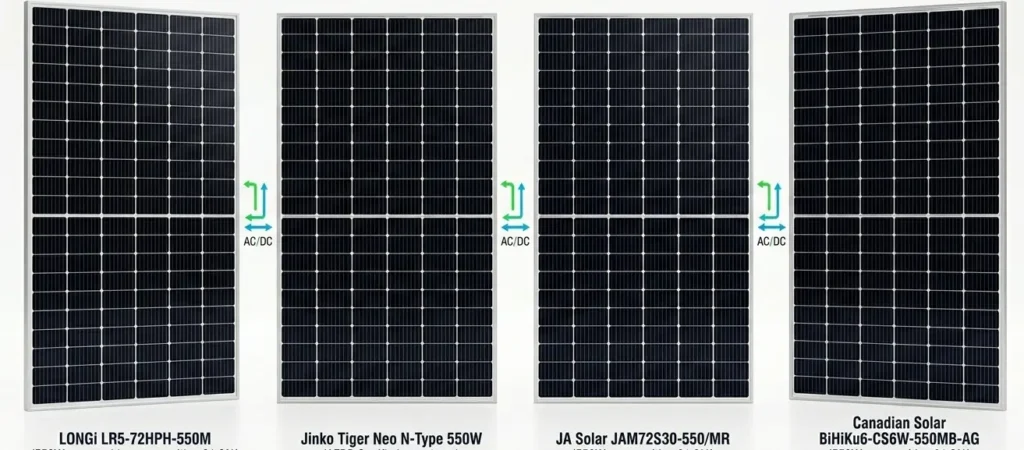
Tier-1 brands like Jinko, LONGi, and JA Solar command premium prices but offer better warranties, higher efficiency, and reliable performance. N-type and bifacial technologies cost more than standard monofacial panels but deliver higher energy yield.
2. Panel Wattage
Higher wattage panels cost more per panel but require fewer panels for the same system size, potentially reducing mounting structure and installation costs.
3. System Type
On-grid systems are most affordable, hybrid systems offer backup power at moderate cost, and off-grid systems require the highest investment due to battery banks.
4. Installation Complexity
Roof type (flat, sloped, or tile), accessibility, and distance from the grid connection point all affect labor and material costs.
5. Market Demand and Currency Fluctuations
USD-PKR exchange rates, import duties, and seasonal demand influence solar panel prices in Karachi. Prices typically rise ahead of summer when demand peaks.
6. Global Raw Material Costs
Rising global prices of silver and copper have increased production costs for Chinese solar companies, leading to higher panel prices in Pakistan.
K-Electric Net Metering in Karachi: How It Works
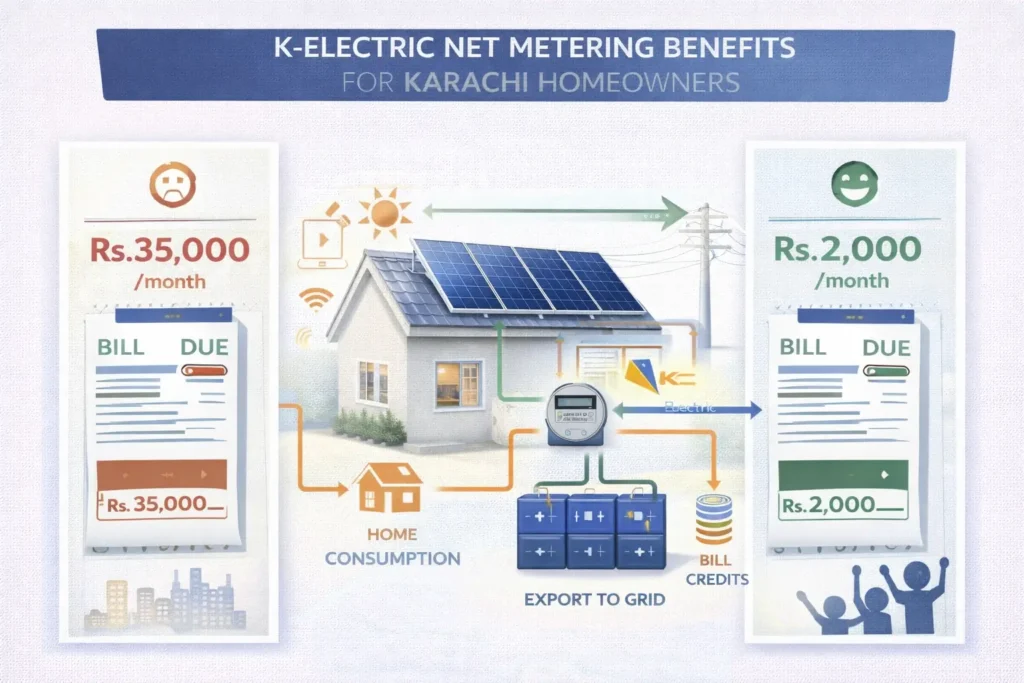
For Karachi households with on-grid or hybrid solar systems, net metering is revolutionary. Homeowners can obtain credits on their bills by feeding extra electricity back into the K-Electric system in accordance with NEPRA standards.
How It Works
- Daytime: Your solar panels generate electricity. Excess energy flows into the grid, and you receive credits for every exported unit.
- Nighttime: Your home draws electricity from the grid as usual, but your bill is offset by the credits earned during the day.
- Result: Many homeowners report monthly bills of Rs. 500-2,000 — down from Rs. 25,000-60,000 before solar.
Important Policy Update (2026)
Potential purchasers are concerned due to recent administrative changes that have an impact on net metering. Surplus electricity is bought at a lower fixed rate as a result of the switch from net metering to net billing, which lowers overall financial returns. Despite this, there is still high demand for rooftop solar, as consumers value lower electricity costs more than the income from extra generation.
Net Metering Application Process
Your solar installer handles the K-Electric net metering application process. Approval typically takes 4-8 weeks.
Installation and Maintenance Tips
Choosing a Reputable Installer
The quality of installation significantly impacts system performance and lifespan. Choose a reputable installer with proven experience, proper certifications, and positive customer reviews.
Installation Timeline
A typical residential installation takes 2-5 days, depending on system size and roof configuration. Net metering approval takes an additional 4-8 weeks.
Maintenance Requirements
Solar panels require minimal maintenance:
- Clean panels every 2-3 weeks to remove dust and salt residue (Karachi’s coastal location may require more frequent cleaning)
- Annual inspection of wiring and connections
- Monitor system performance through your inverter’s app
- For hybrid systems, check battery health periodically
Warranty Considerations
Tier-1 panels offer 12-15 year product warranties and 25-30 year performance warranties. Inverters typically have 5-10 year warranties, while batteries have 2-8 year warranties, depending on technology.
Why Act Now? Price Increase Alert
Solar panel prices in Pakistan are expected to rise further. Here’s why you should consider acting sooner rather than later:
- Price Increase Already Occurred: Solar panel prices have already increased by Rs. 5,000-10,000 per panel in early 2026
- Global Raw Material Inflation: Rising silver and copper prices are increasing production costs
- Regional Tensions: Current conflicts are causing shipment delays and higher freight costs
- Policy Changes: China’s cancellation of export rebate policies effective April 1, 2026, is expected to push prices up further
- Expected Per-Watt Price: The per-watt price of solar panels is expected to reach Rs. 40 in the coming months
If you’re considering installing a solar system, delaying your purchase might lead to higher costs in the near future.
Conclusion
The solar panel price in Karachi in 2026 is a great option for homes looking to reduce energy bills. There is a solar solution for every budget and energy requirement, with panel prices ranging from Rs. 15,800–18,500 for ordinary panels and total system costs from Rs. 450,000 for a 3kW setup to Rs. 2,100,000 for a 15kW system.
Residents in Karachi benefit from some of the lowest solar panel prices in the nation due to the city’s strategic position as Pakistan’s biggest import hub. Solar is a wise investment for houses throughout the city because of the sunny weather, government incentives, and K-Electric net metering regulations.
Potential purchasers should be aware of impending price rises. Homeowners contemplating solar investment may find it advantageous to act sooner rather than later to lock in current rates, since prices have already begun to rise in early 2026 and are anticipated to reach Rs. 40 per watt in the upcoming months.
Selecting high-quality Tier-1 components, collaborating with a reliable installation, and correctly maintaining your system are essential to a profitable solar investment. Solar energy is one of the best investments a Karachi homeowner can make in 2026, with payback times of only 2.5–4 years and system lifespans surpassing 25 years.
For the most accurate, up-to-date pricing, consult with multiple verified solar installers in Karachi who can assess your specific energy needs and provide customized quotes based on current market conditions.
Check the latest solar price in Pakistan. Click here
FAQs
What is the solar panel price in Karachi per watt?
The solar panel price in Karachi ranges from Rs. 28 to Rs. 40 per watt, depending on the brand and technology. Jinko panels cost Rs. 49-55 per watt, while LONGi ranges from Rs. 47-53 per watt.
What is the 5kW solar system price in Karachi?
A 5kW on-grid solar system in Karachi costs Rs. 700,000-850,000, while a hybrid 5kW system with batteries costs Rs. 850,000-1,050,000.
What is the 10kW solar system price in Karachi?
A 10kW on-grid system costs Rs. 1,200,000-1,400,000, while a hybrid 10kW system with batteries costs Rs. 1,500,000-2,000,000.
Is solar worth it in Karachi?
Yes. Karachi’s sunny climate and status as Pakistan’s import hub make solar particularly attractive. With electricity tariffs high and K-Electric facing generation challenges, solar systems typically pay for themselves in 2.5-4 years, then provide free electricity for 20+ years.
5. How long do solar panels last in Karachi?
Quality Tier-1 solar panels last 25-30 years with 80-90% of their original output. Regular cleaning every 2-3 weeks helps maintain optimal performance in Karachi’s coastal environment.
Can I run an AC on solar power in Karachi?
Yes. A 5kW system can run 1-2 inverter ACs, while a 10kW system can run 2-3 ACs along with other household appliances.
Which solar panel brand is best for Karachi?
LONGi, Jinko, and JA Solar are top choices for Karachi. LONGi offers excellent heat tolerance, Jinko provides strong low-light performance, and JA Solar balances performance with affordability.
Does solar increase property value in Karachi?
Yes. Properties with solar systems have higher resale value and are more attractive to buyers seeking energy independence and lower utility costs.
How do I get net metering in Karachi?
Your solar installer handles the K-Electric net metering application process. Approval typically takes 4-8 weeks.
Are solar panel prices expected to increase further in 2026?
Yes. Solar panel prices have already increased in early 2026, and due to rising raw material costs, regional tensions, and China’s policy changes, prices are expected to reach Rs. 40 per watt in the coming months.