Best 7kW Solar System Price in Pakistan 2026
As electricity prices in Pakistan continue to rise and load-shedding remains in many locations, householders are increasingly looking to solar energy as a long-term option. A 7kW solar system, which is strong enough to run several air conditioners, refrigerators, and other necessary appliances at once, is the perfect mix between cost and capacity for homes with moderate to high energy consumption.
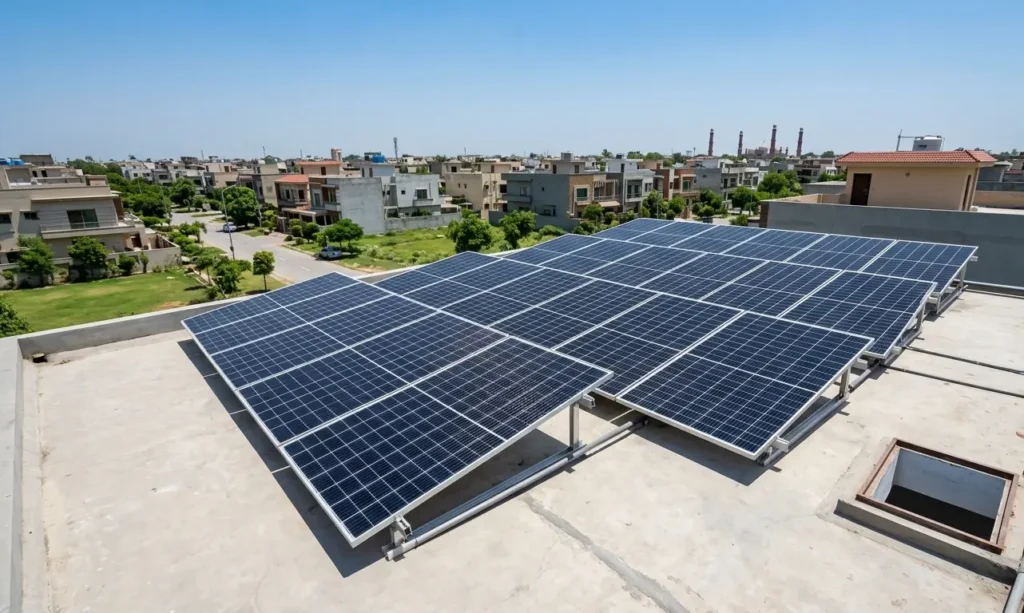
A 7kW solar system is ideal for families with two to three air conditioners, contemporary appliances, and a goal for total energy independence because it is specifically made for homes that use between 800 and 1,200 units per month. Solar investment has grown more feasible due to Pakistan’s plentiful sunshine, which provides 5-7 peak sun hours per day in most places. This guide covers all you need to know about the 7kW solar system price in Pakistan, including system types, component breakdowns, installation concerns, and financial benefits.
What is a 7kW Solar System?
A 7kW solar system is a medium-to-large capacity photovoltaic setup engineered to meet the substantial energy demands of modern Pakistani homes. This system size is ideal for households with:
- 2-3 air conditioners (1.5 ton each)
- 2-3 refrigerators or freezers
- 4-6 ceiling fans
- 10-15 LED lights
- 2-3 LED TVs
- Washing machine, microwave, and other kitchen appliances
- Water pump for overhead tanks
Energy Production Capacity
Depending on seasonal fluctuations in sunshine and system performance, a well-built 7kW system produces roughly 28–35 units (kWh) per day, or 840–1,050 units per month. The 7kW solar system price in Pakistan is an appealing investment for eligible homes, with output capacity that may offset monthly electricity expenses ranging from Rs. 35,000 to Rs. 60,000.
7kW Solar System Price in Pakistan 2026 list
The 7kW solar system price in Pakistan varies significantly based on system type, component quality, and installation requirements. Based on current market data from multiple Pakistani solar providers, here are the latest price ranges for 2026.
Price Comparison by System Type
| System Type | Price Range (PKR) | Best For |
|---|---|---|
| On-Grid 7kW System | Rs. 625,000 – 800,000 | Areas with stable grid, net metering priority |
| Hybrid 7kW System | Rs. 800,000 – 1,000,000 | Backup required during load-shedding |
| Off-Grid 7kW System | Rs. 1,200,000 – 1,500,000 | Remote areas with no grid access |
Note: Hybrid and off-grid prices exclude or include batteries depending on configuration. Prices are based on 2026 market data.
Detailed Price Analysis 7kW Solar System
7kW On-Grid Solar System Price in Pakistan
On-grid systems allow you to export extra electricity for credits on your bill by connecting directly to the WAPDA grid and enabling net metering. Depending on the brands and quality of the components, the cost of a 7kW on-grid solar system in Pakistan can range from Rs. 625,000 to Rs. 800,000. For households in areas with dependable grid connectivity, these systems are the most economical choice.
7kW Hybrid Solar System Price in Pakistan
Hybrid systems retain grid connectivity while combining solar power and battery storage. In Pakistan, the cost of a 7kW hybrid solar system is between Rs. 800,000 and Rs. 1,000,000. Homeowners who desire the flexibility of both grid export and battery backup and cannot afford downtime during power shortages favor these solutions.
7kW Off-Grid Solar System Price in Pakistan
Off-grid technologies offer total energy independence for places lacking dependable grid access. In Pakistan, a 7kW off-grid solar system costs between Rs. 1,200,000 and Rs. 1,500,000, which includes large battery banks for operation at night and on overcast days.
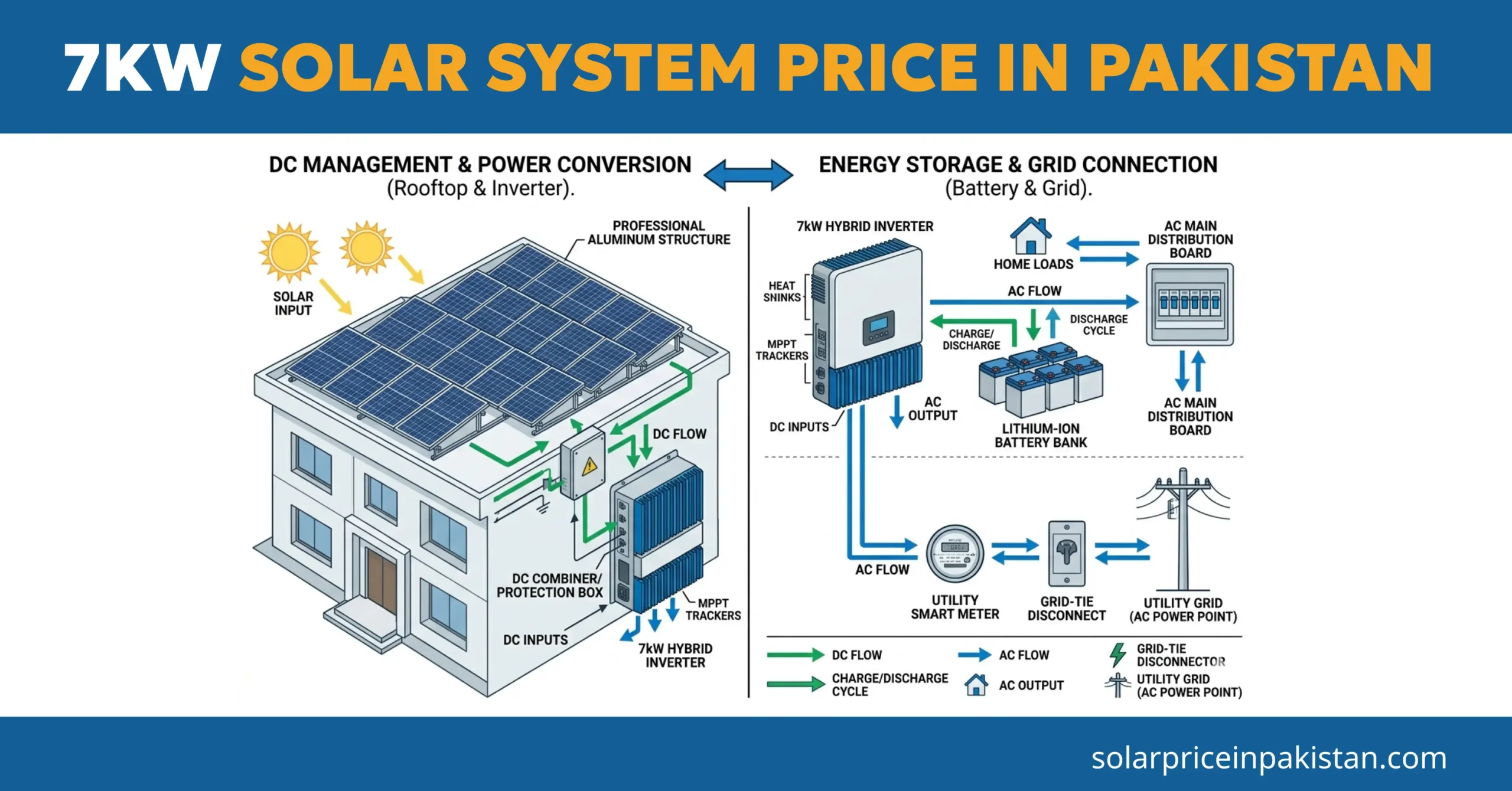
Complete System Components and Costs
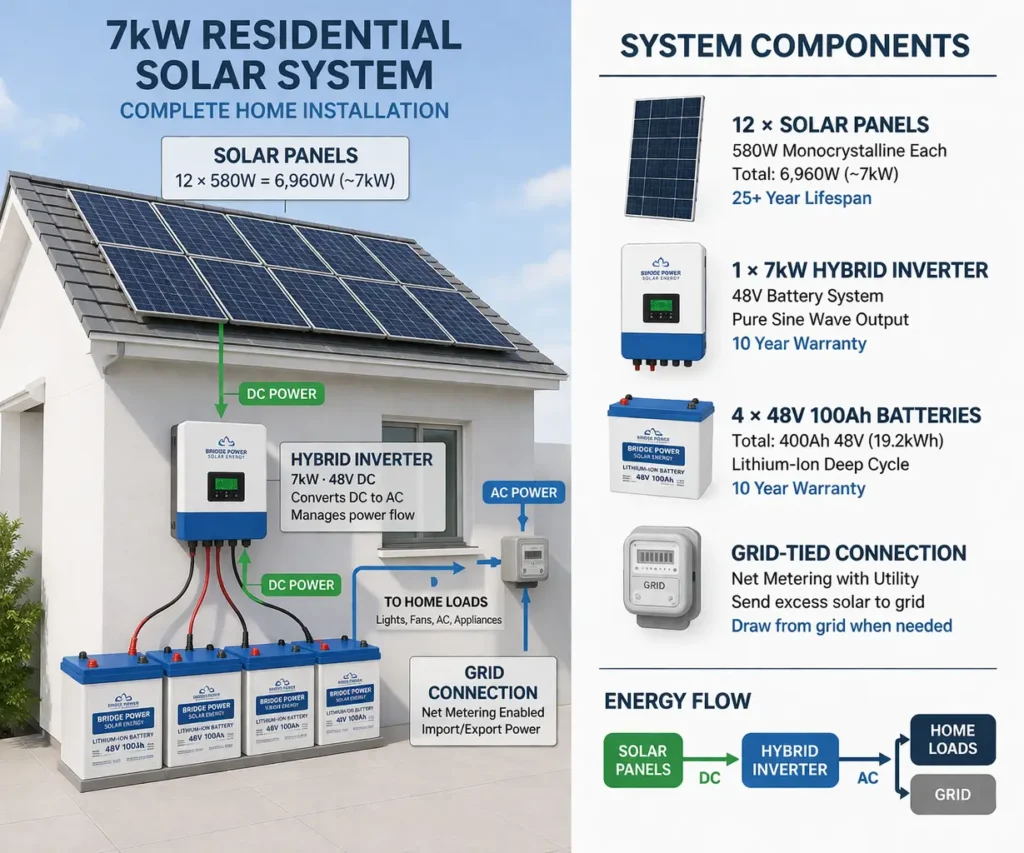
Understanding the 7kW solar system price in Pakistan requires breaking down individual component costs. Here is a detailed breakdown based on typical specifications:
| Component | Specification | Quantity | Estimated Cost (PKR) |
|---|---|---|---|
| Solar Panels | Jinko/Longi 580W N-type Bifacial | 12 panels | 220,000 – 260,000 |
| Inverter | 7kW Hybrid (GoodWe/Growatt/Sungrow) | 1 unit | 180,000 – 250,000 |
| Mounting Structure | GI frame, adjustable | Complete | 60,000 – 80,000 |
| Wiring & Protection | DC cables, breakers, SPD | Complete | 35,000 – 45,000 |
| Batteries (Hybrid) | Lithium-ion or Lead-acid | 4-6 units | 200,000 – 400,000 |
| Installation Labor | Professional installation | Complete | 40,000 – 60,000 |
| Total Estimated Cost | On-Grid | Rs. 625,000 – 800,000 | |
| Total Estimated Cost | Hybrid (with batteries) | Rs. 800,000 – 1,200,000 |
Solar Panel Options for 7kW Systems
For a 7kW system, you have several panel options depending on wattage and technology:
| Panel Wattage | Number of Panels Needed | Panel Technology | Price Range per Panel (PKR) |
|---|---|---|---|
| 550W | 13 panels | Standard Mono | 16,300 – 18,700 |
| 580W | 12 panels | N-type Bifacial | 17,550 – 20,130 |
| 585W | 12 panels | N-type/PERC | 17,600 – 20,700 |
| 600W+ | 12 panels | Premium Bifacial | 18,600 – 21,350 |
Higher-wattage panels like 585W and 600W models reduce the number of panels required, saving on mounting structure and installation costs while potentially increasing overall system efficiency.
Types of 7kW Solar Systems
On-Grid Solar Systems
On-grid systems are connected to the WAPDA grid and operate without batteries. They are the most affordable option and enable net metering, allowing you to sell excess electricity back to the grid.
Advantages:
- Lowest upfront cost
- Net metering reduces or eliminates electricity bills
- Simple design with fewer components
- Fastest payback period (3–4 years)
Disadvantages:
- No power during grid outages
- Requires a stable grid connection
Hybrid Solar Systems
Hybrid systems combine the benefits of on-grid and off-grid configurations. They include battery storage for backup during outages while maintaining grid connectivity for net metering.
Advantages:
- Backup power during load-shedding
- Net metering compatible
- Battery storage optimizes self-consumption
- Protection against grid instability
Disadvantages:
- Higher initial cost than on-grid
- Battery replacement is required every 5–8 years
Off-Grid Solar Systems
Off-grid systems operate completely independently of the national grid. They require larger battery banks to ensure a continuous power supply and are ideal for remote locations with no grid access.
Advantages:
- Complete energy independence
- No reliance on grid stability
- Works in remote areas
- Silent and clean operation
Disadvantages:
- Highest initial investment
- Larger battery banks are required
- No net metering benefits
- More complex system design
Space Requirements for 7kW Solar System
A 7kW solar system requires significant roof space for panel installation. Using modern high-wattage panels, the space requirements are:
- With 550W panels: 13 panels needed
- With 580W/585W panels: 12 panels needed
- Area required: 45–55 square meters (approximately 480–590 square feet)
- Requirement: Open, shadow-free space with proper orientation (south-facing preferred)
For flat roofs, adjustable mounting structures can optimize panel tilt for maximum energy harvest throughout the year.
Appliances a 7kW Solar System Can Run
The 7kW solar system price in Pakistan becomes more meaningful when you consider the substantial load it can support:
| Appliance Type | Quantity Usable Simultaneously |
|---|---|
| Air Conditioners (1.5 ton) | 2–3 units |
| Ceiling Fans | 6–8 units |
| LED Lights | 15–20 fixtures |
| Refrigerators | 2–3 units |
| LED TVs | 2–3 units |
| Washing Machine | 1 unit |
| Microwave/Toaster | 1 unit |
| Water Pump | 1 unit |
This load capacity makes the 7kW system suitable for large families with multiple ACs, extensive appliance usage, and modern home entertainment systems.
Key Features of Quality 7kW Solar Systems
When comparing the 7kW solar system price in Pakistan across different suppliers, consider these essential features:
High-Efficiency Solar Panels
Tier-1 panels from manufacturers like Jinko, LONGi, JA Solar, and Canadian Solar offer better temperature coefficients—critical for Pakistan’s hot climate. Premium N-type bifacial panels cost more but deliver higher energy yield through rear-side generation.
Advanced Inverter Technology
Modern 7kW inverters from brands like GoodWe, Growatt, Sungrow, and Inverex feature:
- MPPT efficiency: Up to 98.6% for maximum energy harvest
- Wide MPPT voltage range: Flexible panel configuration options
- IP65 protection: Dust-tight and water-resistant for outdoor installation
- Dual MPPT: For handling panels on different roof orientations
Smart Monitoring Capabilities
Quality systems include Wi-Fi or Bluetooth connectivity for real-time performance tracking via smartphone apps, allowing homeowners to monitor energy generation and consumption remotely.
Financial Benefits and ROI Analysis
The 7kW solar system price in Pakistan represents a significant investment, but the financial returns are compelling for qualifying households.
Monthly Savings
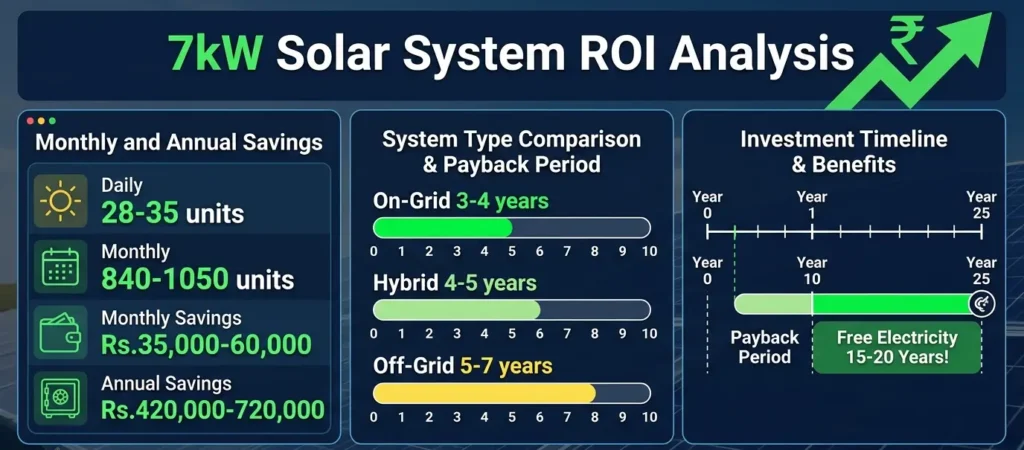
- Daily generation: 28–35 units
- Monthly generation: 840–1,050 units
- Monthly bill reduction: Rs. 35,000 – 60,000 (at current tariff rates)
- Annual savings: Rs. 420,000 – 720,000
Payback Period
- On-grid systems: 3–4 years with net metering
- Hybrid systems: 4–5 years, depending on battery configuration
- Off-grid systems: 5–7 years
Long-Term Value
With a system lifespan of 20–25 years and panels often warrantied for 25 years, the 7kW solar system price in Pakistan delivers excellent long-term returns. After the payback period, homeowners enjoy essentially free electricity for the remaining system life, generating pure savings for 15–20 years.
Factors Affecting the 7kW Solar System Price in Pakistan
Several variables influence final system costs:
1. Brand and Panel Technology
Tier-1 brands like Jinko, LONGi, and JA Solar command premium prices but offer better warranties, higher efficiency, and reliable performance. N-type and bifacial technologies cost more than standard monofacial panels but deliver higher energy yield.
2. Inverter Quality
Premium inverters from GoodWe, Growatt, or Sungrow cost more than budget alternatives but provide better efficiency, longer warranties, and superior after-sales support.
3. Battery Selection (for Hybrid/Off-Grid)
Lithium-ion batteries cost 2–3 times more than lead-acid but offer longer cycle life, deeper discharge capability, and maintenance-free operation. For a 7kW system, battery banks represent a substantial portion of the total cost.
4. Installation Complexity
- Roof type: Flat, sloped, or tile roofs affect material and labor costs
- Site accessibility: Difficult access increases installation time and cost
- Distance from grid connection point: Longer runs require more cabling
5. Market Dynamics
Import duties, currency fluctuations (PKR/USD), and global supply conditions significantly impact the 7kW solar system price in Pakistan. Recent policy changes, including China’s removal of export VAT exemptions for PV products effective April 2026, are expected to increase solar panel prices globally.
Net Metering for 7kW Solar Systems
How Net Metering Works
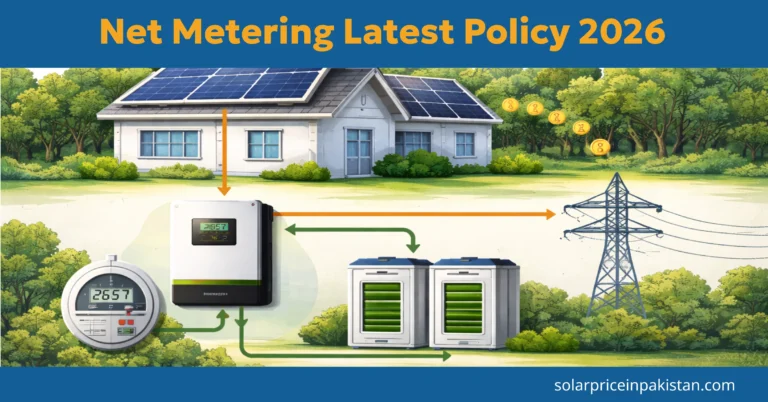
Net metering allows you to export excess solar electricity to the national grid and receive credits against your consumption. For a 7kW system:
- You use solar power during daylight hours
- Excess generation flows to the grid
- You draw from the grid at night using accumulated credits
- Credits reduce your monthly bill, often eliminating it entirely
Net Metering Application Process
To avail net metering benefits:
- Install the system through a certified vendor
- Apply to your local DISCO (LESCO, IESCO, etc.)
- Submit required documentation, including system specifications
- Undergo inspection and meter installation
- Receive approval and start exporting power
Is a 7kW Solar System Right for You?
Consider investing in a 7kW system if:
- Your monthly electricity bill exceeds Rs. 35,000–40,000
- You own a large home with 2-3 air conditioners
- You experience frequent load-shedding and need a reliable backup
- You want to run multiple appliances simultaneously
- You have 45–55 square meters of shadow-free roof space
- You seek long-term energy cost control and protection against tariff hikes
Conclusion
The 7kW solar system pricing in Pakistan is a significant but profitable investment for homes seeking complete energy independence. The financial justification is strong, with possible monthly savings of over Rs. 60,000 and payback times for on-grid systems as short as three to four years. Families that prioritize comfort and convenience will find hybrid systems perfect because they provide the added benefit of continuous electricity during load shedding.
When comparing 7kW solar system prices in Pakistan, consider quality components from reputed brands, competent installation by certified engineers, and extensive after-sales service. Over the course of the system’s 25-year operational lifespan, the initial premium for Tier-1 equipment pays off in the form of increased energy yield, a longer system life, and lower maintenance expenses.
Recent market dynamics, including China’s policy changes effective April 2026 and rising raw material costs, suggest that solar prices may increase in the coming months. Homeowners considering solar investment may benefit from acting sooner rather than later to lock in current rates.
As Pakistan’s energy costs continue to rise and the government promotes renewable energy adoption through net metering policies, the price of a 7kW solar system in Pakistan becomes not just an expense but a strategic investment in your family’s comfort and financial security. Whether you choose on-grid simplicity or hybrid flexibility, a 7kW solar system delivers the power, reliability, and savings that modern Pakistani homes demand.
Check the latest solar price in Pakistan. Click here
FAQs
What is the 7kW solar system price in Pakistan in 2026?
Depending on the system type (off-grid, hybrid, or on-grid), component quality, and installation requirements, the cost of a 7kW solar system in Pakistan can range from Rs. 625,000 to Rs. 1,500,000.
How many units does a 7kW solar system produce per day?
Depending on seasonal sunlight and system efficiency, a correctly placed 7kW system generates 28–35 units (kWh) each day. This corresponds to 840–1,050 units each month.
How many air conditioners can a 7kW solar system run?
Along with fans, lighting, and other appliances, a 7kW system can easily run two to three 1.5-ton air conditioners at once.
How much space is needed for a 7kW solar system?
About 45–55 square meters (480–590 square feet) of open, shadow-free roof area is needed for a 7kW installation.
What is the payback period for a 7kW solar system?
Payback periods vary by system type:
On-grid: 3–4 years with net metering
Hybrid: 4–5 years
Off-grid: 5–7 years
Can I add batteries later to an on-grid system?
Yes, many on-grid inverters may be modified to hybrid functioning by adding additional components. If you intend to add batteries later, it is more economical to install a hybrid inverter from the beginning.
Which solar panels are best for a 7kW system in Pakistan?
Given Pakistan’s climate, Tier-1 brands like Jinko, LONGi, JA Solar, and Canadian Solar are advised. While monofacial PERC panels offer great value, N-type bifacial panels are more efficient but cost more.
What is the warranty on 7kW solar systems?
Solar panels: 10–25 years product warranty, 25–30 years performance warranty
Inverters: 5–10 years (extendable)
Batteries: 2–5 years, depending on technology
Installation: 1–2 years of workmanship warranty, typically
Do I need net metering for a 7kW system?
Net metering is highly recommended since it allows you to sell excess electricity back to the grid, decreasing payback time and increasing return on investment.
Does the price include installation?
Most quotes include standard installation, but always check with your supplier. Complex roof structures or extensive cabling requirements may incur additional fees.